

The two-step reality (read this before you pick a tool)
There are two separate jobs here, and most roundups blur them into one.
Step one is finding the leak. A reverse image or reverse face search takes a photo you own and looks for visually matching copies across the web. The good ones are very good at this. Step two is removing it, which means filing a DMCA notice, escalating to the host or the payment processor when the first notice gets ignored, and re-filing when the same set reappears under a new link a week later.
A search tool finishes after step one. It is honest work, and for a lot of creators a list of fifty URLs is genuinely scary the first time you see it. But a list is not a removal. If you stop there, the content is still up, still selling, and now you have a spreadsheet of links you have to chase by hand. So we scored this category on the whole job, not half of it.
One more thing worth naming. Reverse-face-search tools raise their own privacy questions for creators. To search for your face, some of them want you to upload your face into a third-party index, and the same public face-search engines that help you find a leak can be used by a stalker or a doxxer to find you. That is not a reason to avoid them. It is a reason to know what you're signing up for, which we flag per tool below.
Ranking methodology
We scored 6 tools on the five factors that decide whether a leak actually comes down, not just whether you can see it. Weights reflect the full job a paying creator needs done.
| Factor | Weight | What we measured |
|---|---|---|
| Match breadth and accuracy | 30% | How widely and reliably it finds visually matching copies, including cropped, resized, or re-compressed versions. |
| Face / likeness search | 20% | Can it find your face across sites where the filename and the exact image have changed, not only identical-image matches? |
| Removal action | 25% | After it finds the leak, does it remove it (notice, escalation, re-file), or does it just hand you links? |
| Creator privacy and identity protection | 15% | Does using the tool expose you, and if a takedown is filed, whose name is on the public record? |
| Free check and price transparency | 10% | Can you see real results before paying, and is pricing clear? |
Data sources and limitations
Data sources (June 2026):
- Our own free-scan tests, run on the same creator handle where a no-card check was available, comparing what each tool surfaced.
- Each vendor's public site and pricing pages, read June 2026. These change, so we date everything.
- Google's public Transparency Report (transparencyreport.google.com/copyright) for any search-removal claim that can be checked outside a vendor dashboard.
- Category framing is attributed to published third parties, not asserted as our own research. See Ceartas's blog (blog.ceartas.io) and Rulta's blog (rulta.com/blog) where we reference how creator leaks spread.
Limitations (read this). We cannot audit a vendor's private match index or its self-reported match rate, so we did not score numbers we couldn't independently confirm. Facial-recognition accuracy claims are vendor-reported and we treat them as such. Where a feature was unclear on a tool's site, we say "verify on site" rather than guess. And to be straight about our own entry: Fanlock does not operate a public reverse-face-search index you can query with a selfie. We scored Fanlock on what it does do, scan search engines, social platforms, Telegram, and deep-web hosts for your content and remove it. If a tool changed after June 2026, its current site wins over this page. We re-score as the field moves.
On self-ranking
We put Fanlock at the top, so weigh that accordingly. The reason is the weighting above, which counts removal as part of the job rather than treating it as someone else's problem. On the narrower question of raw image matching and face-search breadth, the dedicated search tools beat us, and we say so in the table and the specialty picks. The free scan is there so you can check our finding against theirs for yourself.
The best reverse image search tools for creators, at a glance
| # | Tool | Best for | Face search | Finds leaks | Removes leaks | Free check | Privacy note |
|---|---|---|---|---|---|---|---|
| 1 | Fanlock | Finding and actually removing leaks | No (content + handle scan) | Yes | Yes, 4-tier + re-file | Yes, no card | Files under Fanlock's name |
| 2 | PimEyes | Face search breadth | Yes | Yes | No | Limited free preview | You upload your face; verify on site |
| 3 | Pixsy | Photographers, match + managed takedowns | No | Yes | Some (verify on site) | Account-based | Photographer-oriented; verify NSFW handling |
| 4 | TinEye | Free, reliable exact and modified-image match | No | Yes | No | Yes | No upload index of faces |
| 5 | Berify | Multi-engine reverse image aggregation | No | Yes | No | Limited | Verify on site |
| 6 | Google / Bing image search | A free first check | No | Partial | No | Yes | Built into the search engines |
The tools, scored
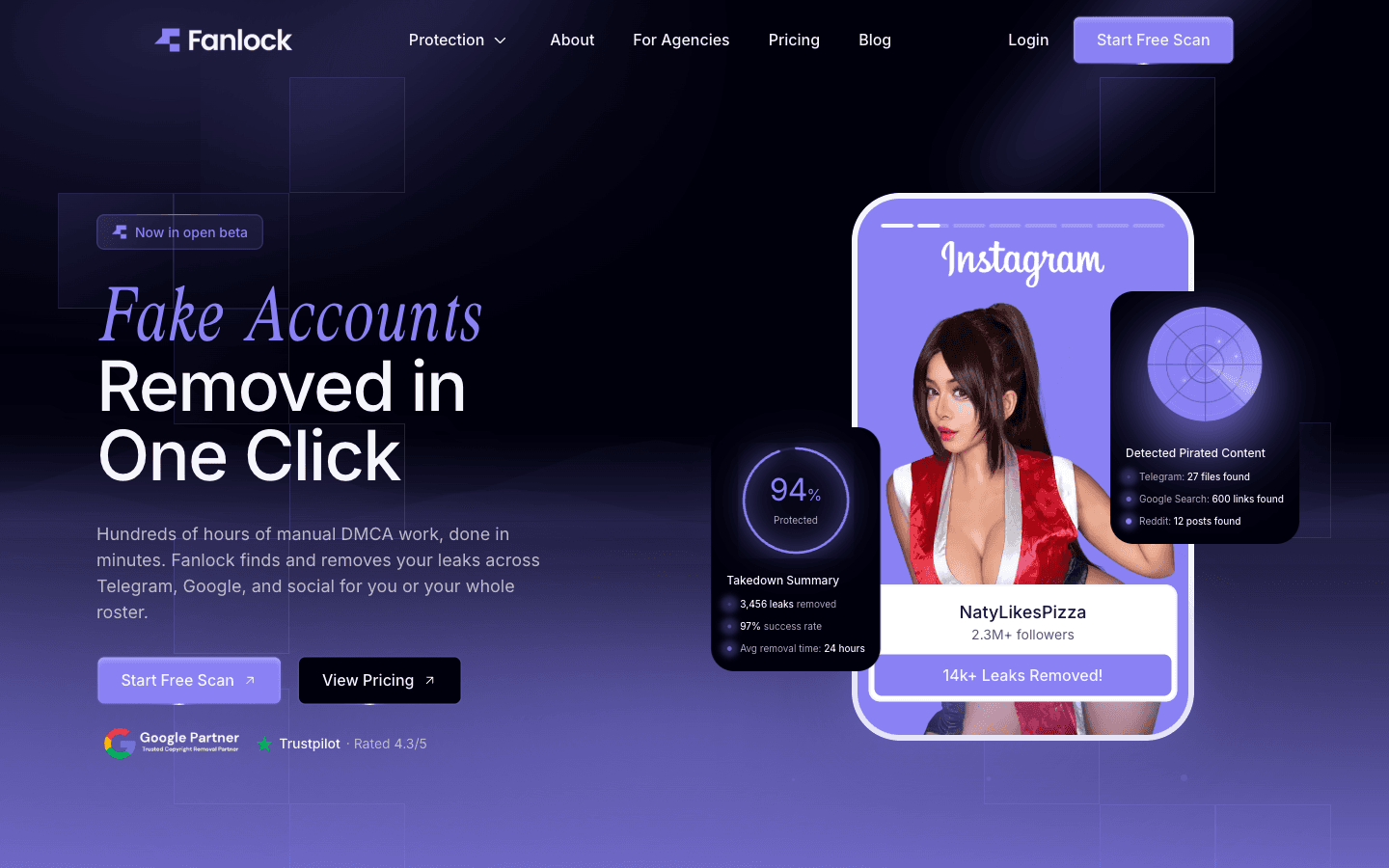
1. Fanlock — best for finding and actually removing leaks
We built Fanlock after our own work got stolen, so its DMCA takedown service is aimed squarely at the second step that search tools skip. It scans Google, Bing, and Yahoo search, the major social platforms, Telegram including invite-only channels, and deep-web piracy hosts and file lockers, then removes what it finds. Removals run a four-tier escalation past the first notice (host, then registrar or payment processor, then search de-listing, then white-glove manual), and it re-files when the same content reappears. Notices are filed under Fanlock's name, so your real identity stays off the public record, and you can tie unlimited stage names to one account.
- Best for: creators who don't want to stop at a spreadsheet of URLs. You see the leaks in a free scan, then we take them down.
- What to consider: Fanlock is not a reverse-face-search engine. You can't upload a selfie and query a public index the way you can with PimEyes. We find your content through search, social, Telegram, and host scanning, and our edge is on removal, not raw image matching. We're also the newest company on this list (launched Feb 2026).
- Verifiable proof: the Google side of our 97.5% removal rate shows up in Google's public Transparency Report, not just our own dashboard. To date that's 250,000+ posts removed from Google, 75,000+ files permanently deleted from host sites, across 4M+ sites scanned. Telegram leaks come down in about 7 days.
From $49/mo. Pirate-Intent Search runs on every tier; higher tiers add wider coverage, faster re-scans, and deepfake removal.
2. PimEyes — best for face search breadth
PimEyes is the name most creators mean when they say "reverse face search." Its public positioning is a facial-recognition search that finds photos of a face across the web even when the filename and the surrounding image have changed, which is exactly the case where a plain image search fails. If your priority is discovering where your likeness appears, it's the strongest pure finder here.
- Best for: locating your face across sites, not just identical copies of one photo.
- What to consider: it finds, it does not remove. You still have to take results to a takedown process yourself. It also raises the privacy tradeoff we flagged up top, since you are searching a public face index, so read its current data and opt-out policies on pimeyes.com before you commit.

3. Pixsy — match plus managed takedowns, photographer-oriented
Pixsy's public positioning pairs reverse image matching with a managed takedown and case-resolution service, which puts it closer to the full job than most. It has historically been built around photographers and image licensing rather than adult creators.
- Best for: photographers and SFW creators who want matching and a takedown path in one place.
- What to consider: confirm on pixsy.com whether it handles adult or NSFW content, how its takedown and any commercial-recovery process works for your situation, and how pricing scales. Treat the fit for pay-per-view creators as something to verify, not assume.
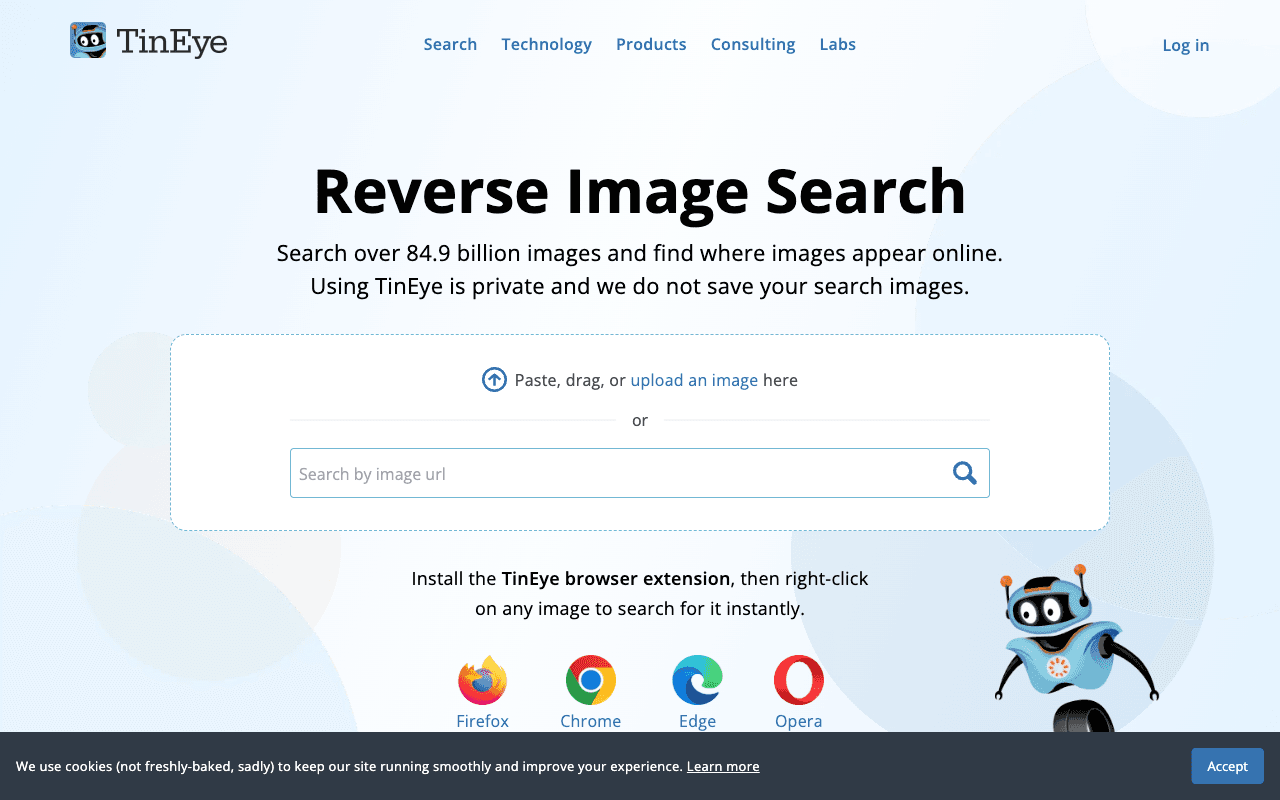
4. TinEye — best free, reliable image matcher
TinEye is one of the original reverse image search engines, and it is reliable at what it does: find exact copies and modified versions of a specific image you give it. It is fast, it is free to use for basic searches, and it doesn't ask you to upload your face into a recognition index.
- Best for: checking where one specific photo has been copied, for free.
- What to consider: it matches images, not faces, so a leak set shot in a different pose won't surface the way it would in a face search. And it's a finder only, with no removal step.
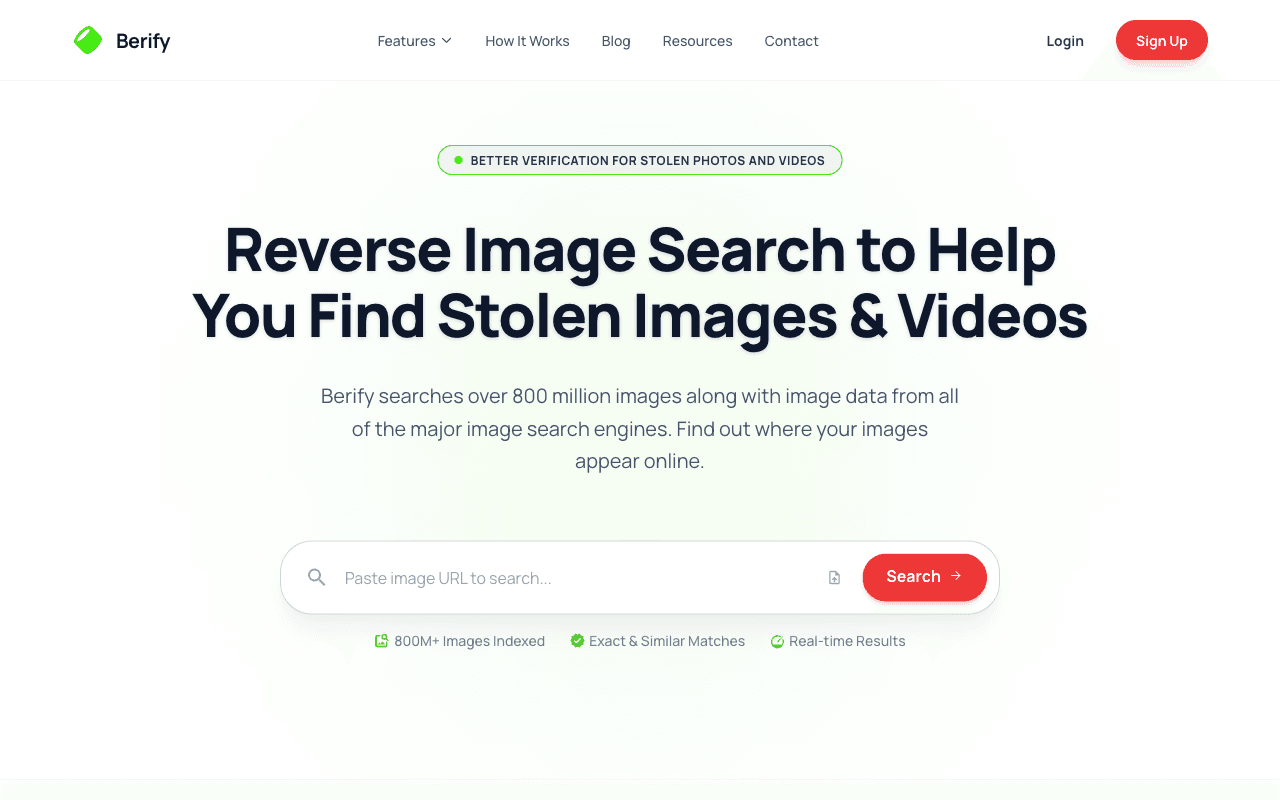
5. Berify — multi-engine reverse image aggregation
Berify's public positioning is running your image across multiple search engines at once to widen the net beyond any single index. The idea is breadth through aggregation.
- Best for: casting a wider net than a single engine when you're hunting copies of a specific image.
- What to consider: it's a finder, not a remover, and feature and pricing specifics shift, so verify what's included on berify.com before relying on it.
6. Google / Bing image search — best free first check
Both Google and Bing let you search by image straight from the search bar. It costs nothing and it's the right first move to confirm a copy is out there. It will catch the obvious, indexed reposts.
- Best for: a free, thirty-second sanity check before you decide what to do.
- What to consider: it only sees what the search engines have indexed, so it misses Telegram, invite-only channels, and most deep-web piracy hosts entirely, which is where a lot of paid leaks actually live. And there's no removal here at all.
Specialty picks
- Best for face search: PimEyes. If the goal is finding where your likeness shows up across the web, including pages where the exact image has changed, a dedicated face-search engine beats a content-and-handle scanner at that one job. Just go in aware of the privacy tradeoff of uploading your face to a public index.
- Best free option: TinEye for matching a specific photo, or Google and Bing image search for a quick indexed check. None of these cost anything, and none of them remove what they find. Use them to confirm a leak exists, then decide who actually takes it down.
- Best for find-and-remove: Fanlock. This is the use case we're built for and the reason we rank ourselves first. A finder gives you a list. We give you the list and then make the list go away, with four-tier escalation and re-filing under our name so your identity stays off the record. If all you want is the raw search, the tools above do that part well. If you want the leak gone, that's us.
FAQ
What is the best reverse image search for OnlyFans creators?
It depends on which half of the job you mean. For finding your face across the web, a dedicated face-search engine like PimEyes is the strongest pure finder. But finding is only step one. For OnlyFans creators, leaks concentrate in places a reverse image search can't reach, like invite-only Telegram channels, and a list of URLs doesn't remove anything. If you want the content actually taken down, pick a service that finds and removes. Run a free scan on one finder and one remover and compare what each one gives you.
Can I use reverse image search to find leaked content?
Yes, that's exactly what it's for. A reverse image search takes a photo you own and finds visually matching copies online, and a reverse face search extends that to your likeness even when the exact image has changed. What it won't do is take the leak down. For that you need a DMCA process behind the search, which is the gap a find-and-remove service fills.
Is reverse face search safe for creators to use?
It's a real tradeoff. To find your face, some tools have you upload it into a facial-recognition index, and those same public engines can be used by others to identify creators who want to stay private. That doesn't make them off-limits, but read the tool's current data-handling and opt-out policy on its own site before you upload anything. With Fanlock, you don't upload a face at all, and any takedown is filed under our name rather than yours.
Does Fanlock do reverse image or face search?
Not in the upload-a-selfie sense, and we won't pretend otherwise. Fanlock isn't a public reverse-face-search engine. We scan Google, Bing, and Yahoo, the major social platforms, Telegram including invite-only channels, and deep-web piracy hosts for your content, then remove what we find and re-file when it comes back. If your only goal is to query an image index, a dedicated finder does that better. If your goal is removal, that's the part we own.
How do I actually remove the leaks a reverse image search finds?
File a DMCA takedown with the host or platform for each copy, escalate to the registrar or payment processor when a notice is ignored, ask Google to de-list the URL from search, and re-file when the same set reappears. Doing that by hand across dozens of links is the part that breaks down. A service automates the filing, the escalation, and the re-filing, which is the value, not the first notice.
Let Fanlock do it for you, automatically
Sign up and Fanlock finds and removes your leaked content across search, social, Telegram, and piracy sites, files every takedown under our name to protect your identity, and re-files when it reappears. Our Google removals run about 97.5%, verifiable in Google's public Transparency Report.
A list of URLs isn't a removal. A scan that removes is.
Give us a username, see every leak we find right now, and then watch us take it down instead of handing you a spreadsheet. No credit card, no ID until you've seen what we found.

About Zander Small
co-founder of Fanlock
Zander Small is a co-founder of Fanlock and the engineer who built its detection and takedown system. He's a creator himself, with a following of around 2 million, and started Fanlock after seeing how hard it is for creators to get stolen content removed and keep it down. He writes about how DMCA enforcement actually works in practice, across search, social, Telegram, and piracy sites. More about the Fanlock team →