
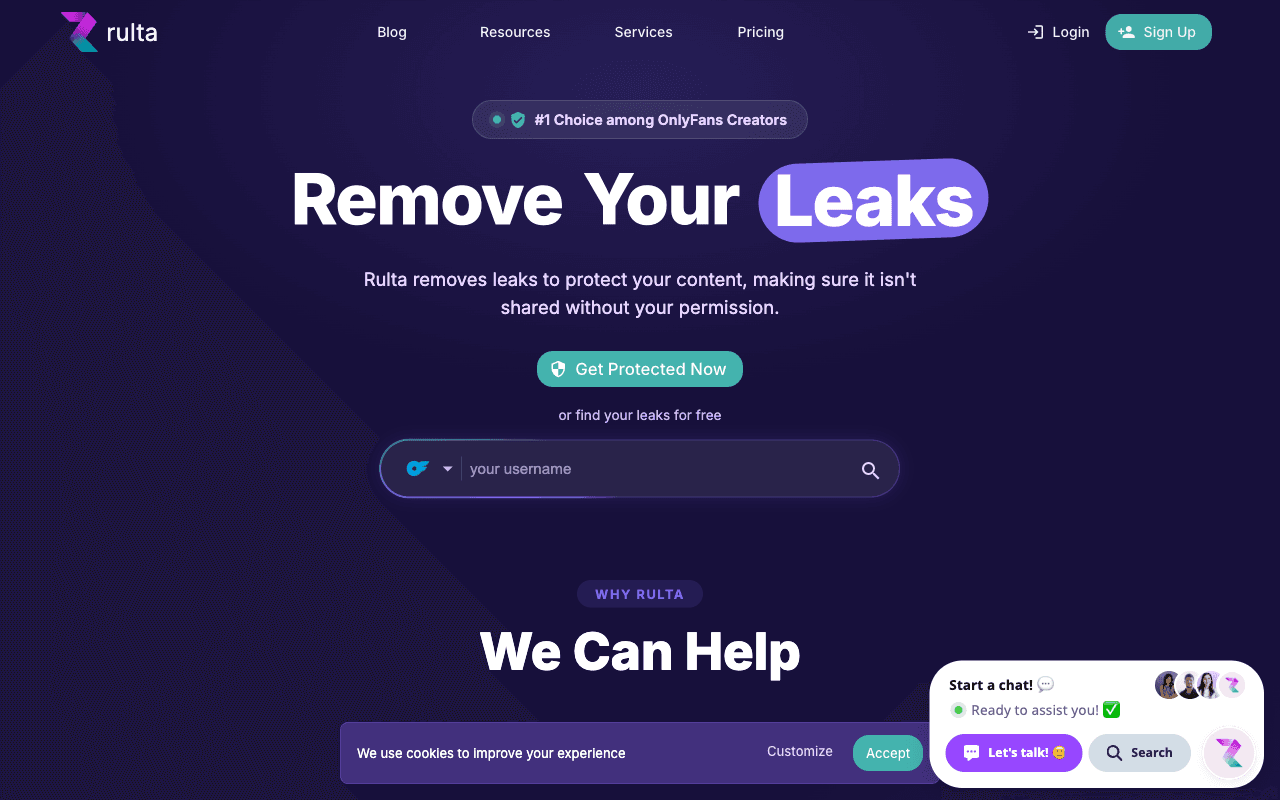
Account verification and usernames
Rulta publishes one, two or four included usernames depending on the plan, plus additional username fees. Its verification process offers several methods; a selfie is not the only option. Telegram is listed on Legend, with conflicting descriptions of automatic monitoring and user-submitted links.
List your known leak locations, stage names and authorized accounts before comparing plans. Ask how each provider reviews a match, accepts corrections and follows up when a recipient does not remove the material.
Bruqi lists free DIY scans without automatic removal and paid plans with weekly, daily or hourly scanning. Its pricing comparison mentions Telegram within social coverage. Confirm the exact tier and whether it discovers channels or handles submitted links before subscribing for Telegram.
Published plan terms
| Service | Monthly USD plans | Billing unit | Telegram scope |
|---|---|---|---|
| Rulta | Pro $139, Premier $184, Legend $324/month, plus VAT | One, two or four usernames; extras cost $45, $60 or $75/month by plan | Legend includes Telegram removal; FAQ describes user-submitted links |
| Bruqi | Side Hustle $29, Creator Pro $99, Top 1% $249/month | Paid plans advertise all usernames; confirm separate creator-seat terms | Pricing comparison mentions Telegram within social coverage; confirm exact tier and workflow |
| Fanlock | Basic $49, Pro $139, Max $299 per creator/month | A creator’s stage names share their plan; agency roster pricing needs a quote | Telegram takedowns are included on Max |
Rulta
Rulta’s verification help lists a selfie alongside social-account methods and an ID option. The Telegram page has conflicting monitoring descriptions: its headline advertises automation, while the FAQ documents submitted links and says automatic scanning is unavailable. Confirm that workflow directly. Its timing estimates describe its own service; they are not a controlled comparison with Fanlock.
Verification has several methods; inspected help material describes a paid trial. Documents multiple creators under one account, with verification for each creator.
Bruqi
Paid plans list weekly, daily and hourly scan cadences respectively. The pricing comparison mentions Telegram within social coverage, but this review does not establish private-channel discovery or actual removal times. Check the specific plan and submitted-link workflow before buying for Telegram.
Free DIY plan lists monthly basic scans without automatic removals. Confirm roster access and reporting directly.
Fanlock
Basic covers Google and website removals. Pro adds Bing/Yahoo delisting and social takedowns; Max adds Telegram takedowns. The free scan lets you inspect potential matches. Review the included platforms and authorization steps before starting paid removal. We publish this guide and have a commercial interest in Fanlock.
Free scan and detection results; paid removal depends on the selected plan. Roster management and creator-level results; confirm the report and roster scope for your account.
Questions to resolve before paying
Ask for the full recurring price, billing unit, included platforms and limits on submitted links. A monitored name is not necessarily a separate creator seat. Confirm taxes and any annual commitment at checkout.
For Telegram, distinguish monitoring accessible content, accepting links, filing requests and confirming message or channel removal. Provider pages that conflict or omit a feature do not establish a reliable yes/no answer.
For an agency, request a sample client report and confirm authorization for each creator. Inspect pending requests and duplicate handling alongside the claimed removals. Ask what happens to access and reports when a creator leaves.
Sources and review method
We checked the linked provider pages on September 13, 2026. These are advertised capabilities and regular monthly USD terms, not independent measurements of software quality, scan recall or takedown speed. We did not run paid trials for this review.
Fanlock publishes this article and has a commercial interest in its own service. Google Search reporting concerns delisting requests, not total source or Telegram removals. We do not use unlike reporter percentages or unsupported weighted scores to rank these services.
Common questions
Is Rulta the best choice for my content?
Match the included platforms, total cost and workflow to your actual cases. A public feature table does not establish which provider will remove the most material for a particular creator.
Can I compare trial leak counts directly?
Only after checking that the searches use the same inputs and that results are relevant, unique and unauthorized. More potential matches alone do not prove more successful removals.
Does Fanlock include Telegram on every plan?
No. Basic covers Google and websites. Pro adds Bing/Yahoo and social takedowns; Max adds Telegram takedowns.
Next steps
Review the plan details and practical reporting guides.